I Picked Up a Cherry Blossom Branch — and Ended Up Reporting It to NYC
Spring, cycling, and a familiar ritual
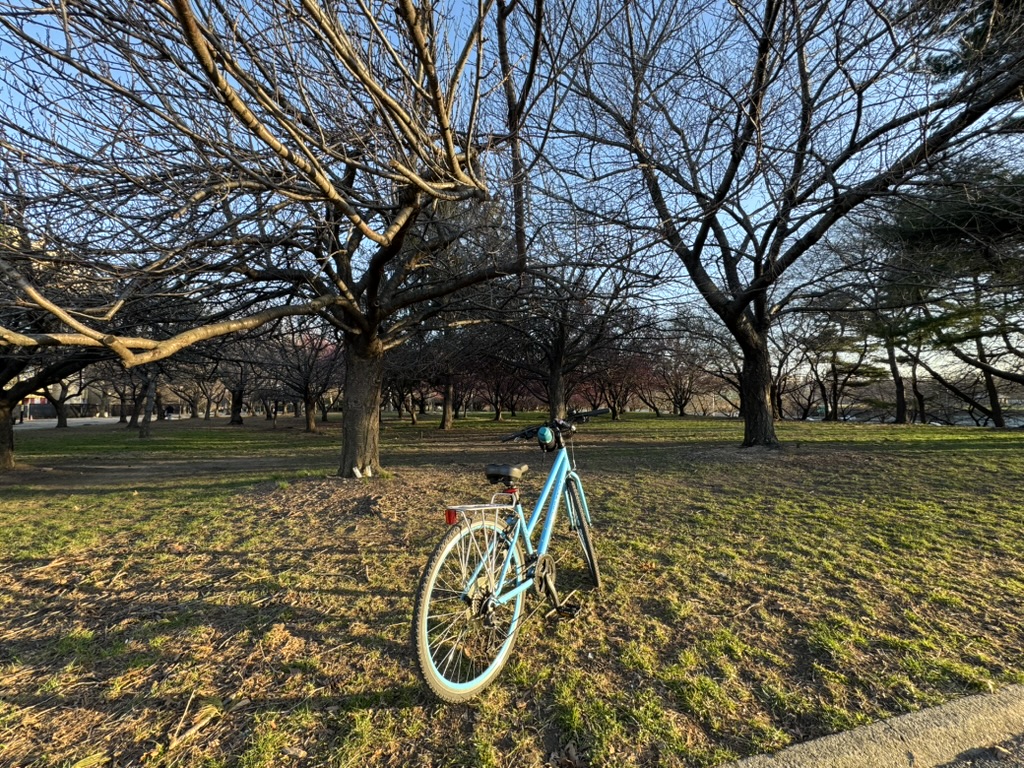
I live near Flushing Meadows–Corona Park in Queens, and every year, when cherry blossom season arrives, I go looking for it — often by bike.
It has become one of my small seasonal rituals. Nothing formal, nothing dramatic. Just something I return to every spring, almost instinctively. A way of checking in with the season. A way of reminding myself that beauty still comes around again.
This year, one of those rides led me somewhere unexpected.
Candles, cut branches, and a moment of hesitation
One evening in the park, I came across something unusual under one of the cherry blossom trees.
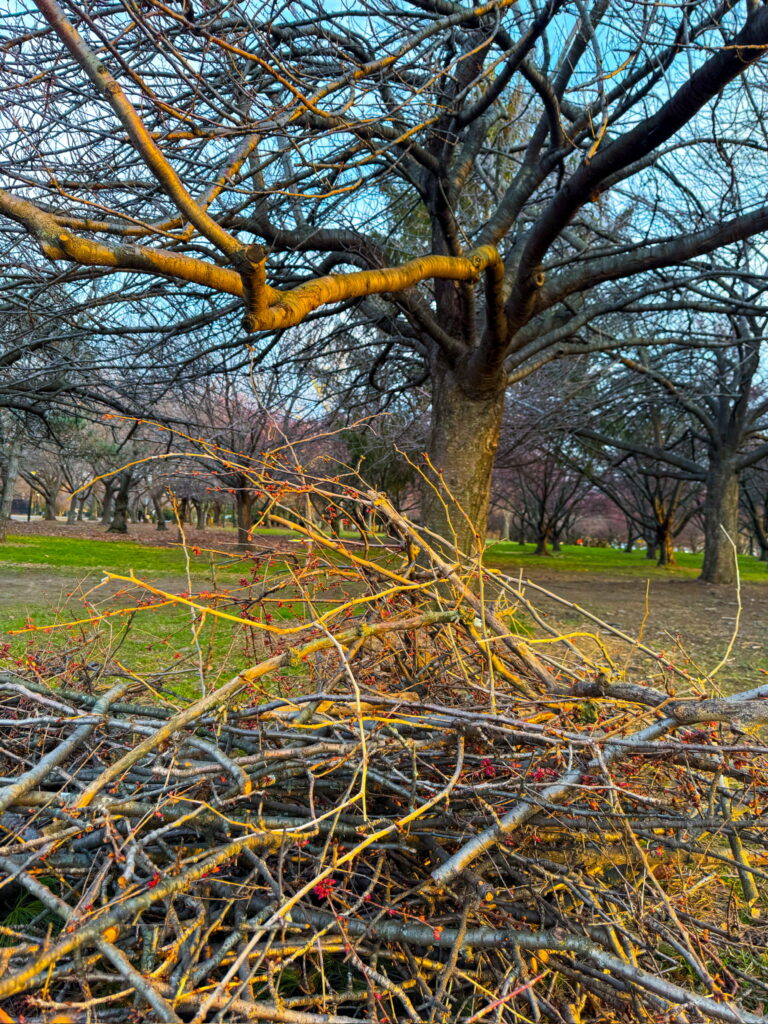
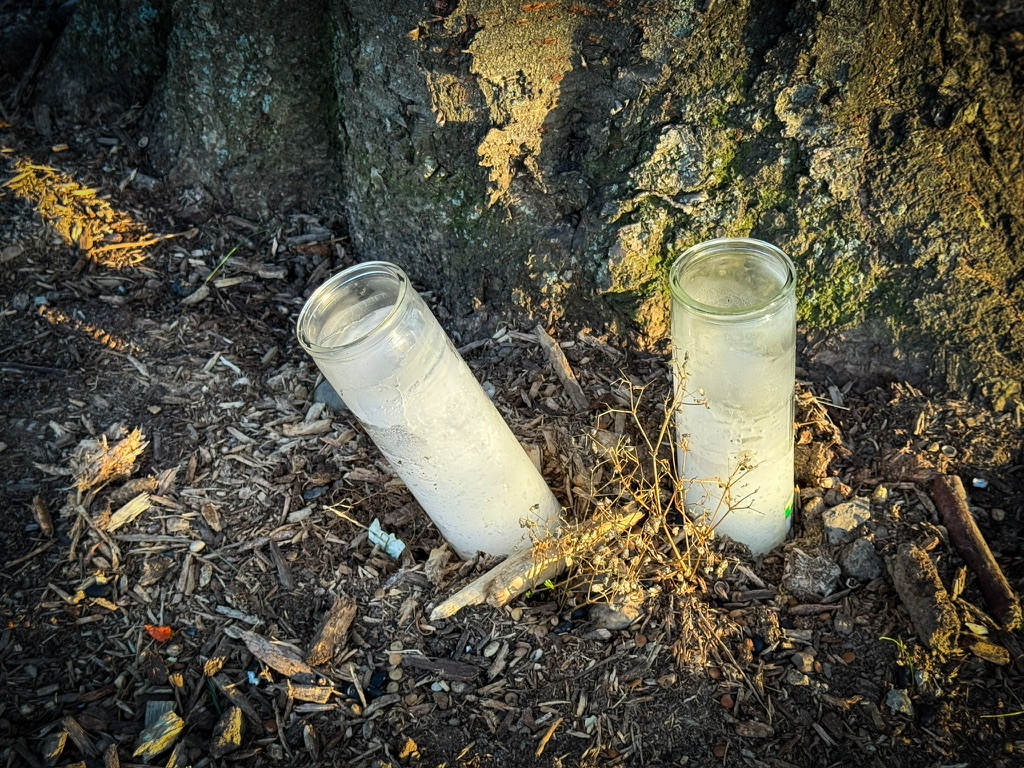
There was a large pile of freshly cut branches on the ground, many of them still covered in buds. In front of the tree were two large candles.
I stopped immediately.
Something about it felt wrong. Maybe it was the candles. Maybe it was the sight of so many branches cut from a tree that was just about to bloom. I have always hated seeing people casually walking around with cherry blossom branches in their hands, as if beauty gives them permission to take whatever they want. So when I saw that pile, I did not think, maybe this is routine maintenance. I felt sorry for the tree. Honestly, I felt disgusted. It looked as if the tree had been sacrificed for someone else’s purpose.
I stood there feeling bad for it.
And then I did something that may sound odd to some people, but felt natural to me: I picked up a few branches with buds and apologized to the tree.
I remember thinking, I’m sorry this happened to you. I’ll take these home and care for them.
At the same time, another thought crossed my mind — one of those half-serious, irrational thoughts that still manages to feel real in the moment. What if the candles meant something? What if this had been part of some ritual? What if I was bringing home branches carrying some kind of bad energy?
It may sound dramatic, but I really did wonder that.
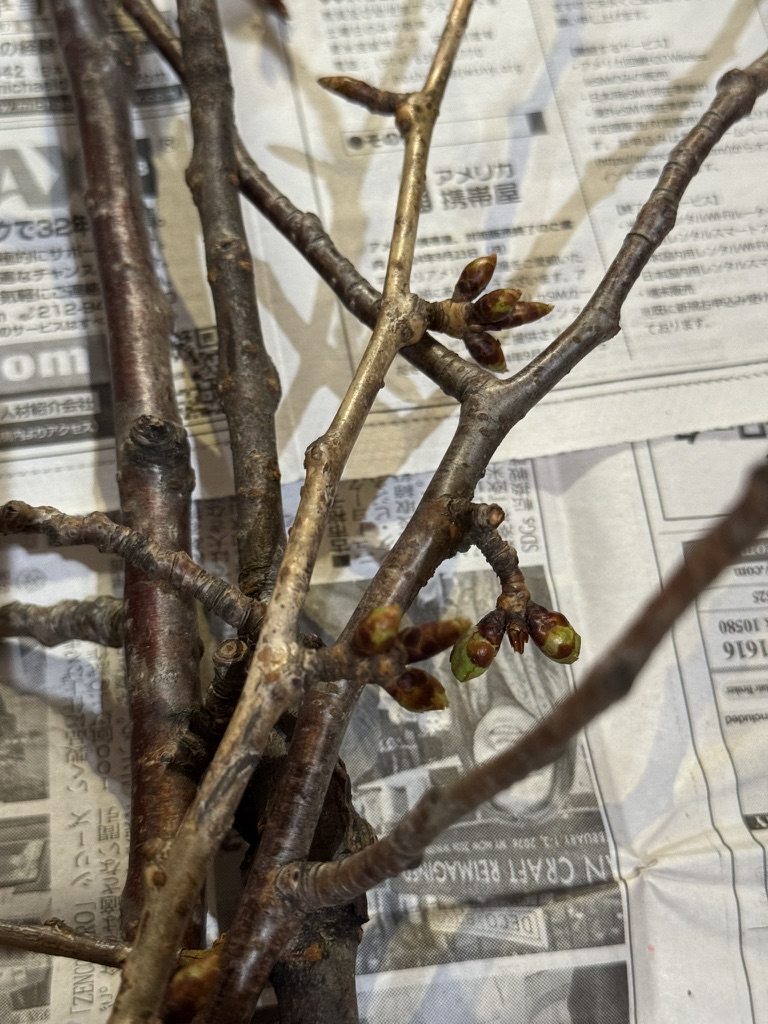
Still, I spoke gently to the tree, took the branches home, placed them in water, and trimmed away the little dead twigs. Even in the vase, they looked beautiful to me — but also unfairly cut.
Asking AI what I was really looking at
Once I got home, I wanted another opinion, so I uploaded photos and asked AI what it thought.
One response echoed exactly where my mind already was. It agreed that the scene looked awful and suggested several possibilities: simple vandalism, some kind of ritual, or even a hate-related act. It also asked whether I had reported it to NYC Parks.
That question stayed with me.
Had I reported it?
Trying to do the right thing
New York City has a 311 system where residents can report issues around the city, so I decided to do what I thought was the responsible thing.
I downloaded the NYC 311 app, chose unauthorized pruning since there was no obvious category for what I had seen, and submitted a report with a photo and the location as best as I could.
Then it turned into a very New York experience.
The location in the report did not register properly. Instead of the tree, it showed my home address.
I tried to fix it. I called 311 and explained the problem, but the conversation did not lead anywhere useful. The representative could not correct the location once the case had been opened, and I was also told that this did not really qualify as vandalism.
So the case remained open — inaccurate, unresolved, and attached to the wrong place.
I had tried to do the right thing, but somehow still ended up with a useless city report linked to my own address.
That felt extremely New York.
A second opinion
Later, I asked ChatGPT about the same situation and uploaded the photos again.
This response was much calmer.
It pointed out that the cuts looked relatively even, the tree itself appeared healthy and intact, and the branches seemed to have been gathered temporarily for later pickup. In other words, it did not look like someone had illegally cut down part of the tree. It looked much more like professional pruning or routine maintenance.
It also suggested that the candles might have been unrelated, or simply placed there afterward.
That answer gave me a sense of relief I did not realize I needed.
And for the first time, I felt okay about keeping the branches.
A few days later, reality became clear
A few days later, the branches I had brought home bloomed fully in my vase.
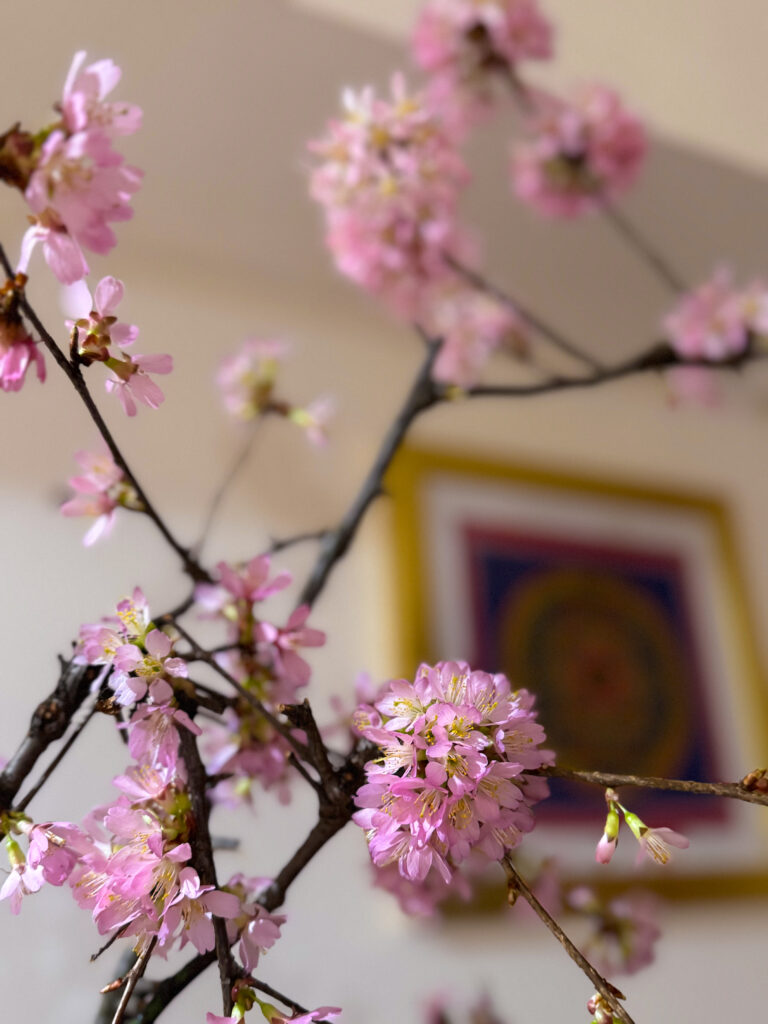
Because they were indoors, I ended up seeing the blossoms before almost anyone else around me. In a strange way, I felt like I got the earliest cherry blossom viewing of the season.
When I rode past the same area again, the scene looked completely different.
The large pile of branches was gone. Nearby, I saw big bags lined up neatly for collection, filled with leaves and yard waste. Other cherry trees in the area had also been trimmed in the same way. Everything looked orderly, practical, and far less mysterious than it had that first evening.
That was when everything finally made sense.
It was not vandalism.
It was not a ritual.
It was simply maintenance.
What actually happened
Looking back, nothing extraordinary had happened at all.
A tree had been pruned.
Branches had been left behind.
I picked some up.
They bloomed.
That was it.
Later, I even picked up a few more budded branches that had been left behind, because I did not want them to go to waste. I kept thinking that maybe someone else, too, might notice them before the garbage truck came and take them home to enjoy.
A Psychology of Uncertainty
What unsettled me most was not only the cut branches themselves, but not knowing what they meant.
When something feels ambiguous, the mind often tries to fill in the gaps before all the facts are there. Psychology helps explain that. One idea is intolerance of uncertainty — the difficulty of sitting with ambiguity when there is no clear explanation yet. Carleton describes it, at its core, as a kind of fear of the unknown, which helps explain why uncertainty itself can feel so emotionally charged (Carleton, 2012).
That may be why this small scene affected me so strongly. A pile of cut branches, two candles, and a tree just about to bloom became more than a visual detail. My mind started turning it into a story.
That, too, is part of how human cognition works. We do not simply take in information passively; we use context to make sense of what we see. Research on word recognition shows that people identify letters more easily when they appear in meaningful words than in random letter strings (Coch et al., 2010). In everyday life, we do something similar not only with perception, but with meaning.
Only later, once I understood that the scene was most likely routine maintenance, did my emotional reaction begin to soften. The facts had not changed. My interpretation had. Psychology would describe that shift as cognitive reappraisal — changing the way we interpret a situation, and in doing so, changing its emotional impact (Wang & Yin, 2023).
A Gentle Ending
In the end, nothing extraordinary had happened.
A tree had been pruned.
Branches had been left behind.
I picked some up.
They bloomed.
The explanation was ordinary, but the experience still felt real.
Maybe that is why this moment stayed with me. It was not really only about the branches. It was about how quickly the mind tries to close the distance between not knowing and knowing. About how uncertainty can become a narrative before the facts fully arrive.
Still, I do not think I was wrong to respond with care. Even in misunderstanding, I felt sorry for the tree. I wanted to protect something that looked beautiful and vulnerable. I wanted to do the right thing, even awkwardly, even imperfectly.
And for a story that began with doubt, a cut cherry blossom branch blooming quietly at home feels like a gentle enough ending.
Flower Power: The Psychological Benefits of Blossoms
Flower Power 2025: A Global Tour Through Blooms and Well-Being
References
Carleton, R. N. (2012). The intolerance of uncertainty construct in the context of anxiety disorders: Theoretical and practical perspectives. Expert Review of Neurotherapeutics, 12(8), 937–947.
Coch, D., Mitra, P., & George, E. (2010). Word and pseudoword superiority effects reflected in the ERP waveform. Brain Research, 1329, 159–174.
Wang, Y.-X., & Yin, B. (2023). A new understanding of the cognitive reappraisal technique: An extension based on schema theory. Frontiers in Behavioral Neuroscience, 17, Article 1174585.













0 Comments