Why Do Brits Dominate Barbados Tourism?
A Solo Traveler’s Observation — and the Psychology Behind It
I’ve traveled widely, and I’m used to seeing a mix of nationalities wherever I go. Even in very popular destinations, diversity is usually part of the experience — different languages, different rhythms, different ways of moving through a place.
So when I arrived in Barbados, something felt different almost immediately.
Not gradually.
Immediately.
Choosing Local — and Noticing Who Was Already There
I didn’t stay in a resort.
I booked a small room through Vrbo/Airbnb in Oistins, intentionally — close to the beach, close to everyday life, somewhere I could feel the local rhythm rather than a curated tourist version of the island. I stayed for five nights.
Even there, the pattern appeared.
The small, separate room directly in front of mine was occupied by a retired Englishman from Blackpool. He went fishing every day. Barbados wasn’t a once-in-a-lifetime trip for him — he was a frequent repeat visitor, someone who returned year after year and clearly knew the island well.
He was kind, easy to talk to, and generous with local tips. Over the days, we ended up sharing some activities. His presence felt settled, almost resident-like — not transient in the way tourists often are.
We talked often, and through him I learned about Blackpool and the surrounding area. England had once felt like a place I might go, but over time that feeling shifted. Hearing about his hometown there, in Barbados, briefly brought that earlier idea back.
The young couple staying upstairs were also from England. The husband went surfing every day, moving through the mornings with the kind of routine that suggested this wasn’t his first time here either.
What struck me wasn’t discomfort, but consistency.
Accommodations are usually where nationalities mix. Here, even my temporary “home” felt nationally uniform. That was my first clear signal: this wasn’t coincidence — it was pattern.
Before the Beaches, Before the Tours
That pattern had actually shown itself even earlier.
The taxi driver who picked me up from the airport spoke immaculate King’s English — precise, measured, unmistakably British in tone. When I commented on it, she smiled and told me she had studied in the UK for many years.
Then, almost casually, she added that she had remained single.
“I don’t like Bajan guys,” she said — calmly, without drama.
It wasn’t the comment itself that stayed with me, but what it revealed. This wasn’t just a destination receiving British tourists. The UK–Barbados connection ran through education, speech, identity, and personal life choices — on both sides.
Before I’d seen a beach or joined a tour, that relationship had already introduced itself.
Arrival: The Body Adjusts First
I arrived in the late afternoon after a difficult journey. Like many solo trips, the first hours weren’t about exploration but stabilization — water, food, rest.
I stopped at a supermarket for breakfast supplies, then went to the fish market for dinner. There was no flying fish that day, so I ordered marlin with rice and peas and a salad. I also ordered fish cakes — more than my body could handle.
That night, my stomach was upset. The neighborhood was noisy. Sleep came in fragments.
Travel often begins this way — the body lagging behind the mind.
When the Tourist Space Becomes Audible
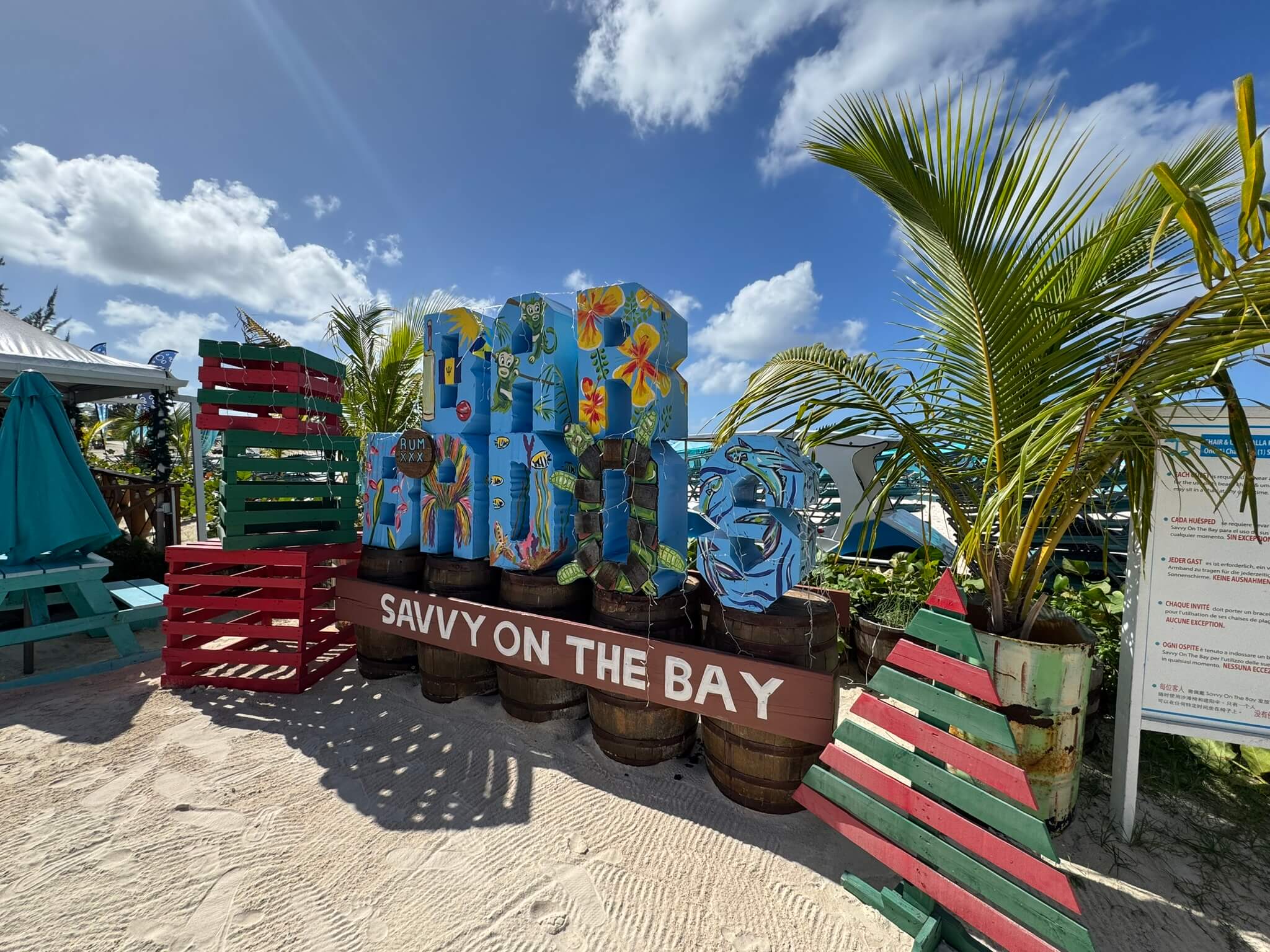
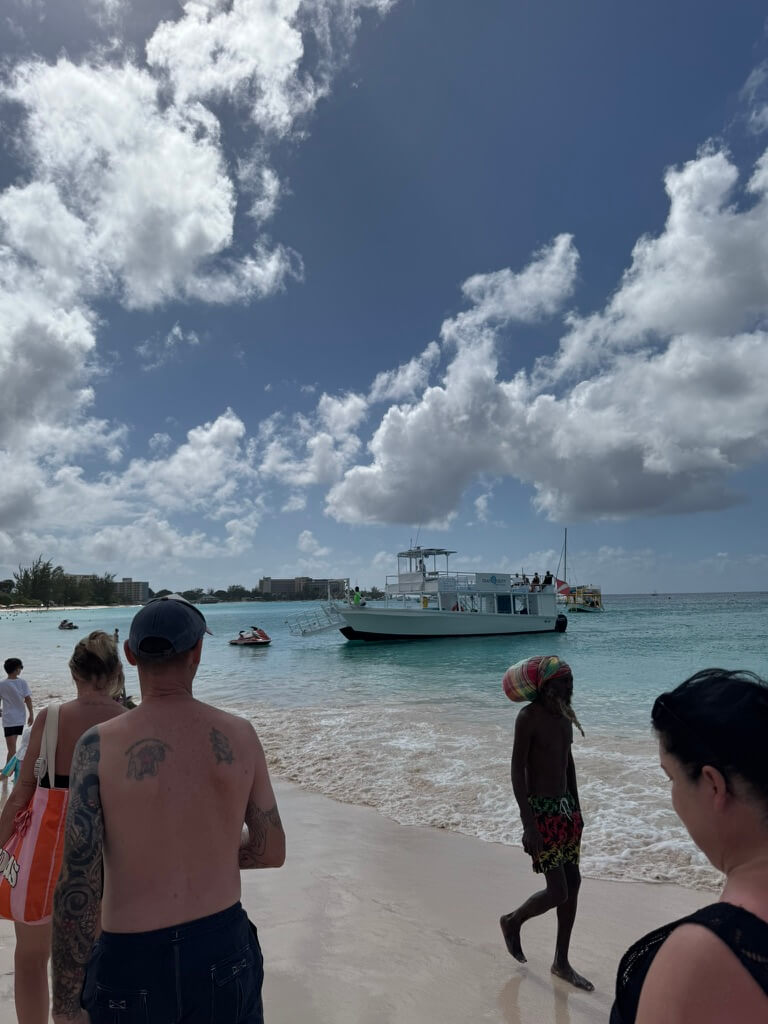
The next day, I joined a snorkel tour at Carlisle Bay.
Everyone on the boat was British.
Different ages, different accents, different backgrounds — including British travelers of Indian descent — but English voices everywhere. Familiar, relaxed, unselfconscious.
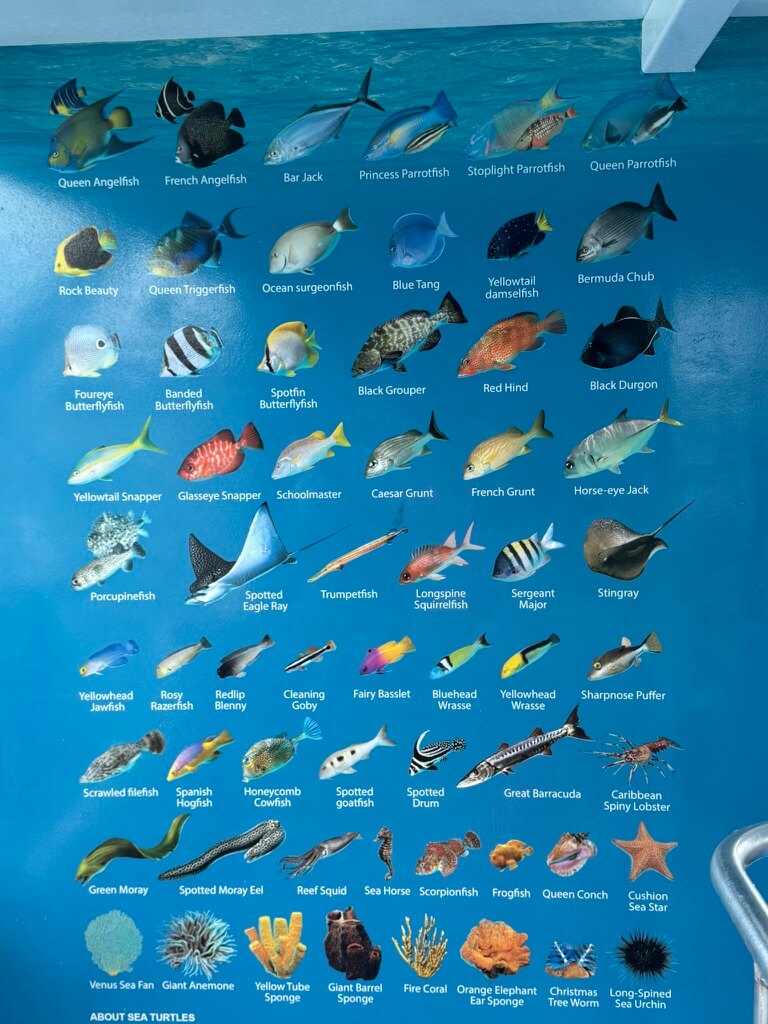
The snorkeling itself was fine: a turtle resting on the sea floor, a distant barracuda, later a shipwreck full of fish. I wasn’t chasing wildlife; I’d had deeper marine experiences years earlier in Belize.
What stayed with me wasn’t what I saw underwater — but what surrounded me above it.
This tour wasn’t internationally mixed the way most are.
It felt socially concentrated.
The Numbers Behind the Feeling
Later, I checked the data — and it matched what I was experiencing.
Before the pandemic, travelers from the UK accounted for roughly one-third (about 33%) of all stay-over visitors to Barbados, making the UK the single largest source market for many years.
Even though U.S. visitor numbers have grown more recently, that long history still shapes who books flights, who returns repeatedly, and who becomes most visible on the ground.
In other words, what felt like “everyone” wasn’t just perception — it was the legacy of decades of travel patterns.
Repeat Visitors Aren’t Just Common — They’re Celebrated
What surprised me most was learning that repeat visitors in Barbados aren’t just noticed — they’re formally recognized.
A different driver later told me that frequent repeaters are sometimes invited to official receptions, where long-time visitors are honored for returning again and again. In some cases, these events involve senior tourism officials and even the Prime Minister of Barbados.
That made the retired fisherman in front of my room make sense in a new way.
For some travelers, Barbados isn’t just a destination.
It’s a relationship — one that the island actively acknowledges.
Why People Go to the Same Place Again — and Again
Travel culture often celebrates novelty. In reality, many people travel for regulation, not transformation.
Familiarity Reduces Cognitive Load
New destinations demand constant interpretation — new systems, new cues, new uncertainty. For people already managing work stress and long winters, travel becomes a recovery strategy.
Returning to a familiar place:
- Reduces decision fatigue
- Lowers anxiety
- Allows the nervous system to settle faster
For many British travelers, Barbados is not an unknown.
It’s a known emotional state.
Belonging Without Integration
Repeat visitors often aren’t seeking deep cultural immersion. Instead, they return to places where they know how things work and feel socially competent.
This creates belonging without obligation — a temporary identity anchor.
In that sense, Barbados becomes less a destination and more a seasonal refuge.
Novelty Isn’t Always Restorative
There’s a myth that travel must be transformative to be meaningful.
In reality:
- Novelty stimulates
- Familiarity soothes
For those seeking rest rather than growth, too much novelty can feel like work.
Barbados offers a rare balance: long-haul escape with cultural ease.
Stepping Outside the Tourist Bubble
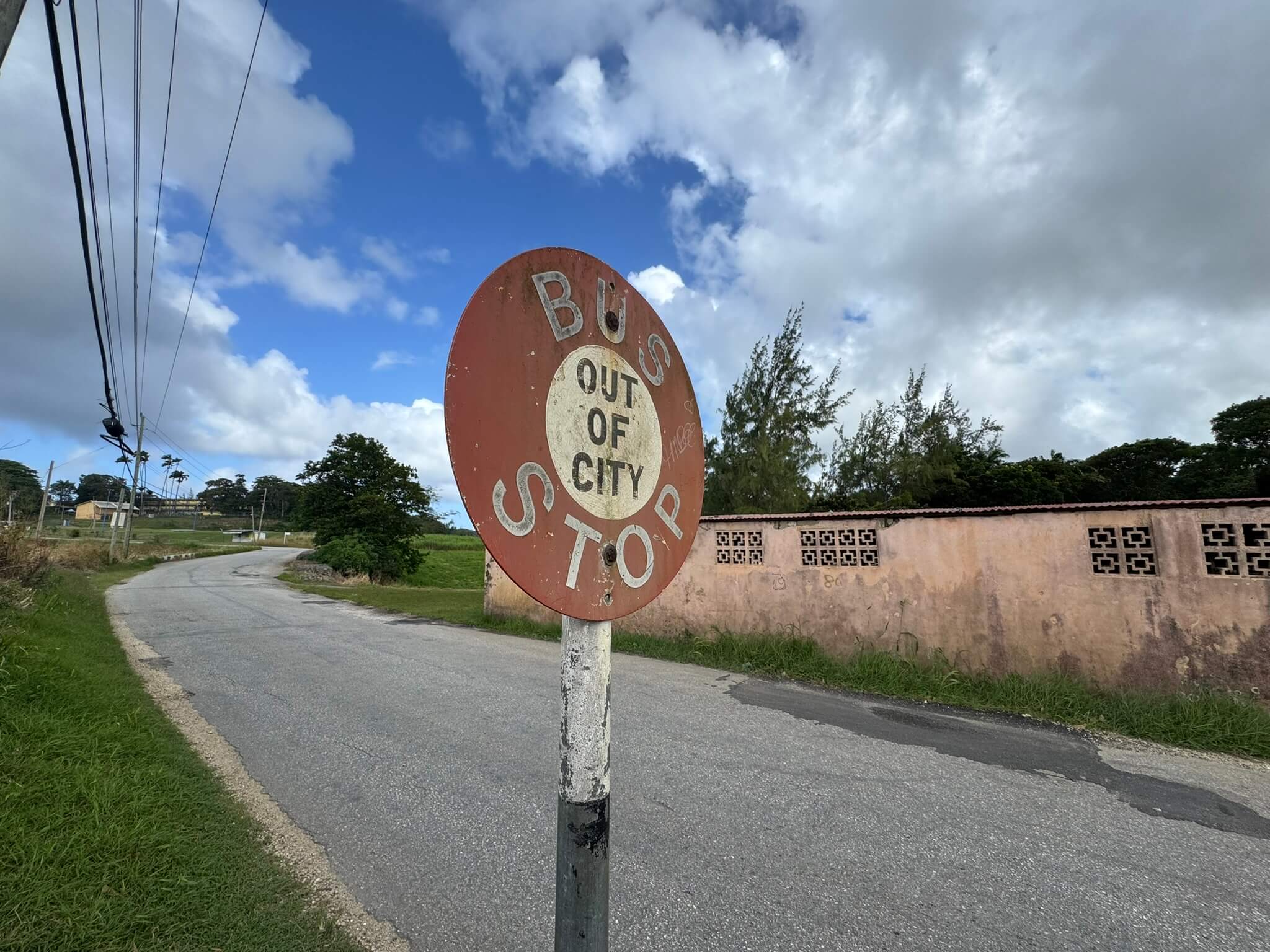
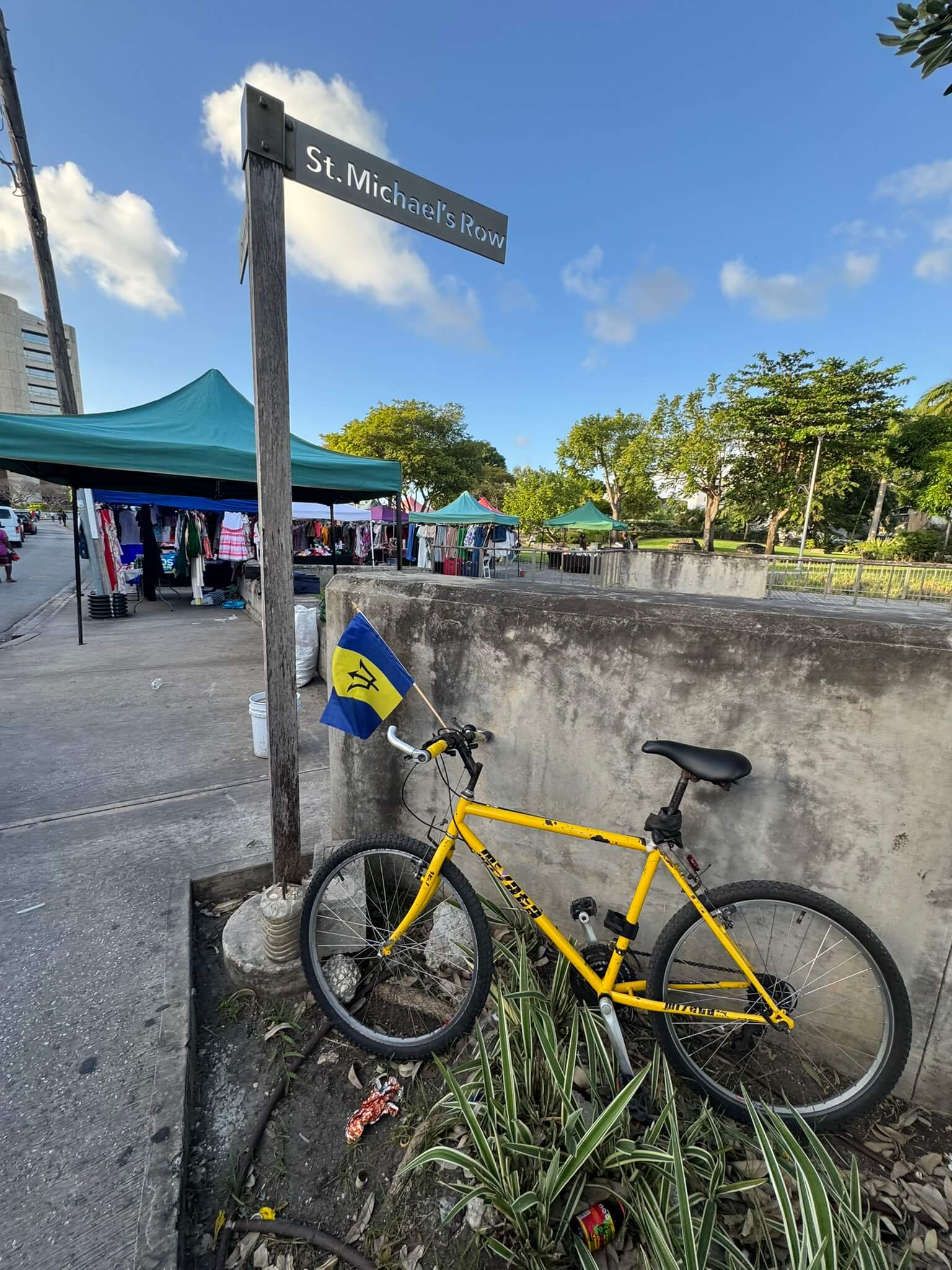
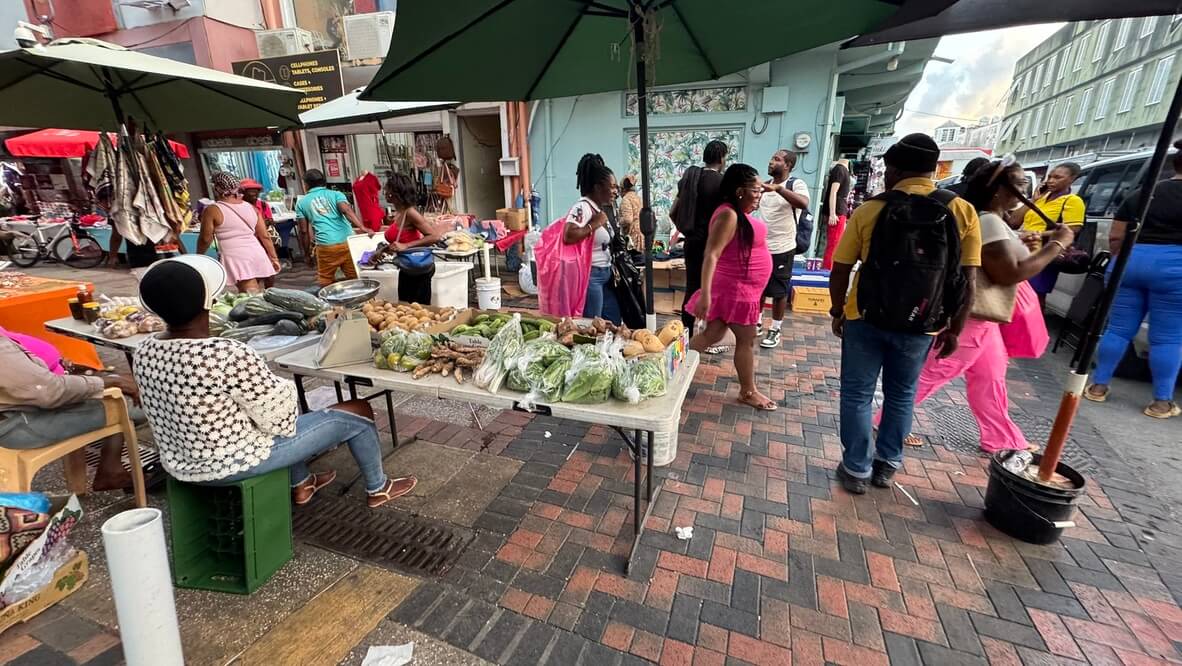
Later, I moved more through local spaces — buses, vans, supermarkets, unplanned conversations.
Confusing routes. Long waits. Casual help from strangers.
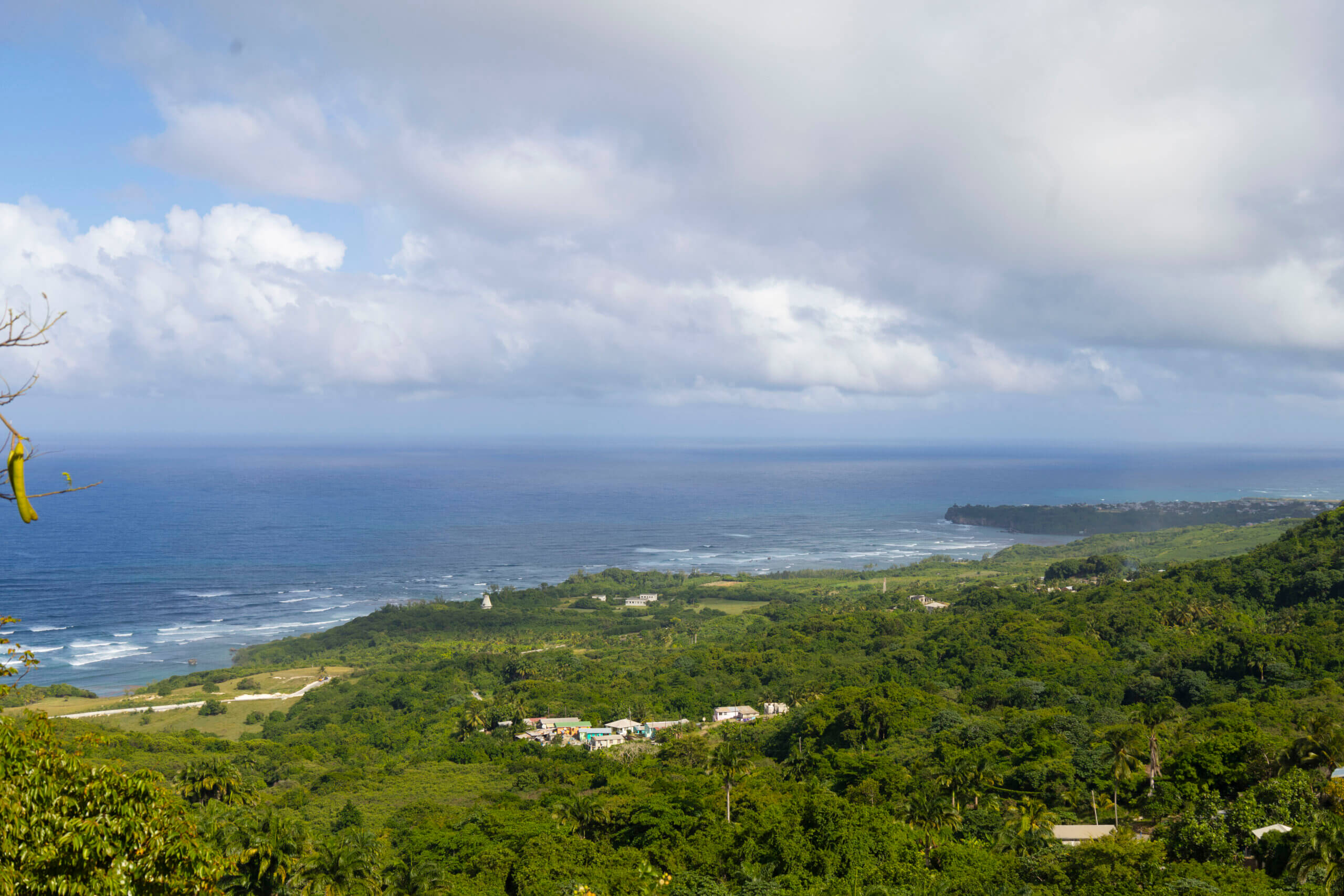
Bathsheba’s dramatic waves without crowds.
ZR vans full of locals, efficient and crowded, cash only.
Here, the British presence faded — not because it disappeared, but because I was no longer in spaces designed primarily for visitors.

Takeaway
Brits dominate Barbados tourism not because others don’t travel there, but because history, climate psychology, flight access, and familiarity align in a rare way.
For decades, British travelers made up roughly one-third of all stay-over visitors, and that legacy still shapes who returns, who feels at ease, and who becomes most visible — especially among repeat visitors who come back year after year and are even formally recognized by the island.
As a solo traveler, you don’t just pass through these patterns — you feel them.
Sometimes, noticing who surrounds you tells you as much about a place as beaches, food, or guidebooks ever could.
Not all travel is about discovery.
Sometimes, it’s about returning to somewhere the nervous system already knows how to rest.
References & Further Reading
- Barbados Tourism Marketing Inc. (BTMI)
Visitor arrival data and source market breakdowns
https://www.visitbarbados.org - Tourism Analytics – Barbados Statistics
Pre-pandemic stay-over visitor data showing UK visitors at ~32–33% of arrivals
https://tourismanalytics.com/barbados-statistics.html - Barbados Today
Coverage of official receptions honoring long-standing repeat visitors
Reception held to honour repeat visitors to Barbados
https://barbadostoday.bb - Caribbean Today
Reporting on shifts in source markets (US surpassing UK post-pandemic)
https://www.caribbeantoday.com - Pearce, P. L. (2011). Tourist Behaviour and the Contemporary World.
Multilingual Matters.
(For repeat visitation, familiarity, and travel motivation psychology) - Kaplan, S. (1995). The Restorative Benefits of Nature. Journal of Environmental Psychology.
(For familiarity, restoration, and cognitive load concepts)












0 Comments